Pages

Showing posts with label Astronomy. Show all posts
0
ShareThe solar eclipse of January 15, 2010 is an annular eclipse of the Sun. The eclipse starts at Uganda, passes through Nairobi, enters Indian ocean where the greatest eclipse is taking place in mid of Ocean for a maximum of 11 Mins and 7.7 seconds

Sri Lanka and India simultaneously will be the first Asian lands [...]

The solar eclipse of January 15, 2010 is an annular eclipse of the Sun. The eclipse starts at Uganda, passes through Nairobi, enters Indian ocean where the greatest eclipse is taking place in mid of Ocean for a maximum of 11 Mins and 7.7 seconds.
Solar Eclipse 2010

Sri Lanka and India simultaneously will be the first Asian lands that are kissed by the eclipse. The moon will cover the sun’s disc during the millennium’s longest annular solar eclipse. Last time when India saw this ‘Ring of Fire’ was on Nov 22, 1965, and it will not be witnessed again before June 21, 2020.

Solar Eclipse 2010

The maximum duration of the eclipse would be 11 minutes 08 seconds over the Indian Ocean, thus making it the longest annular eclipse of the millennium.

Solar Eclipse 2010

People in southern parts of the country will be lucky to see the heavenly sight of ‘Ring of Fire’. In India, the eclipse will start around 11 a.m. and end around 3:15 p.m. Delhi will see the partial phase of this solar eclipse. It will start at 11:53 a.m. and end at 3:11 p.m.

Solar Eclipse 2010

An eclipse of the Sun or solar eclipse can only occur at New Moon when the Moon passes between Earth and Sun. If the Moon’s shadow falls upon Earth’s surface, we see some portion of the Sun’s disk covered or ‘eclipsed’ by the Moon.

Solar Eclipse 2010

Solar Eclipse 2010

Solar Eclipse 2010

Solar Eclipse 2010

Solar Eclipse 2010

Solar Eclipse 2010

After leaving Africa, the path crosses the Indian Ocean where the maximum duration of annularity reaches 11 minutes 8 seconds. The central path then continues into Asia through Bangladesh, India, Burma and China.

Solar Eclipse 2010

Solar Eclipse 2010

Solar Eclipse 2010

Solar Eclipse 2010

Solar Eclipse 2010

Solar Eclipse 2010 Update. It’s been 10 years since we have the last solar eclipse and now this January 15, 2010 we will be having one of the longest Solar.

[Source]
0
Two Moons 2010
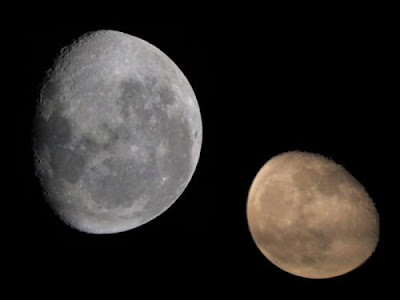
Two Moon 2010 – There has been a lot of talk today about two moons appearing on the sky on August 27 of this year. This is an old rumor that seems to appear every year since 2003, actually it should be called the two moons hoax.

The 2003 email said Mars would be circulating very near Earth which would make it appear as if the sky had two moons during the night. You may recognize the following text from the email if you’ve got one recently:

“The Red Planet Mars is about to be spectacular as it can be seen in the sky. Earth and Mars will be at its closest in 60,000 years. The next time Mars may come this close may be after several years in the year 2287. The encounter between Earth and Mars will culminate on August 27 when the red planet comes to within 34,649,589 miles of Earth and will be next to the moon the brightest object in the sky at night. It will have a magnitude of -2.9 and will appear 25.11 arc seconds wide. In its 75-power magnification, Mars will look as large as the full moon through the naked eye.By August 27 where both planets will be closest to each other, Mars will rise at nightfall and will reach its highest point in the sky at 12:30 am. As such, we will be able to see two moons in the sky – one is the actual moon and the other is the red planet Mars. Mark your calendars to see Mars as the second moon in the sky. This is a rare opportunity as no one alive today will ever witness the second event when this happens again.”

Why this is a hoax? Simply because this won’t happen, you won’t see two moons on August 27, 2010. The close proximity of Mars was registered in 2003, and in 2005 the red planet came close again but not as it happened in 2003. Next time it comes closer to Earth will be in 2287 so have your email ready!

Two Moons 2010 New Video


[Source]
Chuva de MeteorosA chuva de meteoros Perseidas, pode ser visto na madrugada desta sexta-feira com o céu claro e sem nuvens. Outros pontos do mundo, puderam acompanhar o fenômeno. No Brasil, algumas regiões como Norte e Nordeste tiveram maior facilidade de acompanhá-lo.

Quando a Terra cruza a linha de destroços deixada por um cometa, acontece a famosa chuva de meteoros, desta vez os destroços foram deixados pelo cometa Swift-Tutle, que dá uma volta ao redor do Sol a cada 130 anos.

[Source]
Meteor Shower

The next meteor shower is the Perseids on the night of August 12. The Moon is just a couple of days past new at the shower's peak, so there will be no moonlight to interfere with the faint meteors. The shower should reach its peak in the hours after midnight (before dawn on August 13), with a maximum of a few dozen meteors visible per hour.
Name Date of Peak Moon
Quadrantids night of January 3 Almost Full
Lyrids nights of April 21/22 Sets around 3-4 a.m.
Eta Aquarids night of May 5-6 Rises around 3 a.m.
Perseids night of August 12 Sets around 10 p.m.
Orionids night of October 21 Full
Leonids night of November 17 Sets around 4 a.m.
Geminids night of December 13 Sets around midnight


NOTES These are approximate times for the Lower 48 states; actual shower times can vary. Bright moonlight makes it difficult to see all but the brightest meteors.

What are meteor showers?

An increase in the number of meteors at a particular time of year is called a meteor shower.

Comets shed the debris that becomes most meteor showers. As comets orbit the Sun, they shed an icy, dusty debris stream along the comet's orbit. If Earth travels through this stream, we will see a meteor shower. Depending on where Earth and the stream meet, meteors appear to fall from a particular place in the sky, maybe within the neighborhood of a constellation.

Meteor showers are named by the constellation from which meteors appear to fall, a spot in the sky astronomers call the radiant. For instance, the radiant for the Leonid meteor shower is located in the constellation Leo. The Perseid meteor shower is so named because meteors appear to fall from a point in the constellation Perseus.

What are shooting stars?

"Shooting stars" and "falling stars" are both names that people have used for many hundreds of years to describe meteors -- intense streaks of light across the night sky caused by small bits of interplanetary rock and debris called meteoroids crashing and burning high in Earth's upper atmosphere. Traveling at thousands of miles an hour, meteoroids quickly ignite in searing friction of the atmosphere, 30 to 80 miles above the ground. Almost all are destroyed in this process; the rare few that survive and hit the ground are known as meteorites.

When a meteor appears, it seems to "shoot" quickly across the sky, and its small size and intense brightness might make you think it is a star. If you're lucky enough to spot a meteorite (a meteor that makes it all the way to the ground), and see where it hits, it's easy to think you just saw a star "fall."

How can I best view a meteor shower?

If you live near a brightly lit city, drive away from the glow of city lights and toward the constellation from which the meteors will appear to radiate.

For example, drive north to view the Leonids. Driving south may lead you to darker skies, but the glow will dominate the northern horizon, where Leo rises. Perseid meteors will appear to "rain" into the atmosphere from the constellation Perseus, which rises in the northeast around 11 p.m. in mid-August.

After you've escaped the city glow, find a dark, secluded spot where oncoming car headlights will not periodically ruin your sensitive night vision. Look for state or city parks or other safe, dark sites.

Once you have settled at your observing spot, lie back or position yourself so the horizon appears at the edge of your peripheral vision, with the stars and sky filling your field of view. Meteors will instantly grab your attention as they streak by.

How do I know the sky is dark enough to see meteors?

If you can see each star of the Little Dipper, your eyes have "dark adapted," and your chosen site is probably dark enough. Under these conditions, you will see plenty of meteors.

What should I pack for meteor watching?

Treat meteor watching like you would the 4th of July fireworks. Pack comfortable chairs, bug spray, food and drinks, blankets, plus a red-filtered flashlight for reading maps and charts without ruining your night vision. Binoculars are not necessary. Your eyes will do just fine.

[Source]
We earthlings are very fortunate to have launched many satelites in to space that have gone close enough to our neighbouring planets to get quite amazing photographs. I have included below the best images of each major object in our solar system. In order of distance from the sun :

1. The Sun
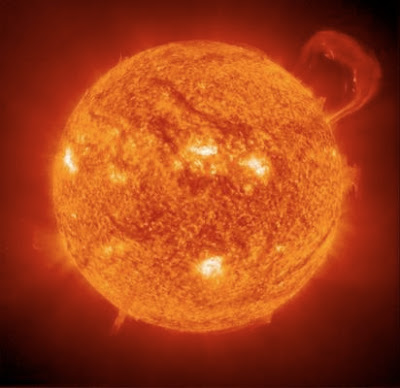
The Sun

The Sun orbits the center of the Milky Way galaxy at a distance of approximately 26,000 light-years from the galactic center, completing one revolution in about 225–250 million years. The orbital speed is 217 km/s (135 mi/s), equivalent to one light-year every 1,400 years, and one AU every 8 days. It is currently travelling through the Local Fluff of the Local Bubble zone of diffuse high-temperature gas, in the inner rim of the Orion Arm of the Milky Way Galaxy, between the larger Perseus and Sagittarius arms of the galaxy.


2. Mercury
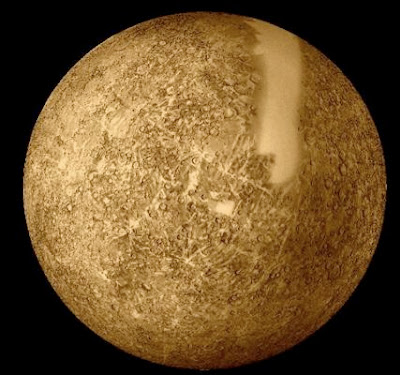
Mercury

Mercury is the smallest planet in the solar system, orbiting the Sun once every 88 days. Physically, Mercury is similar in appearance to the Moon as it is heavily cratered. It has no natural satellites and no substantial atmosphere. The planet has a large iron core.


3. Venus
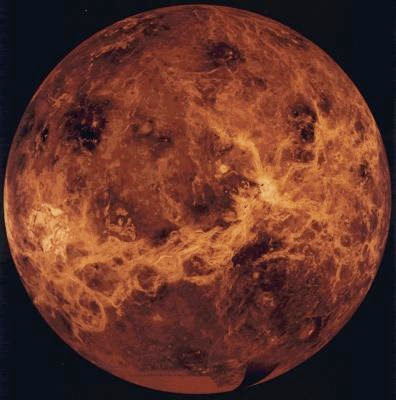
Venus

Venus is the second-closest planet to the Sun, orbiting it every 224.7 Earth days. It is the brightest natural object in the night sky, except for the Moon. Venus reaches its maximum brightness shortly before sunrise or shortly after sunset, for which reason it is often called the Morning Star or the Evening Star. Classified as a terrestrial planet, it is sometimes called Earth’s “sister planet”, for the two are similar in size, gravity, and bulk composition.


4. Earth

Earth

Home to millions of species including humans, Earth is the only place in the universe known to harbor life. About 71% of the surface is covered with salt-water oceans, the remainder consisting of continents and islands; liquid water, necessary for life as we know it, is not known to exist on any other planet’s surface. Earth interacts with other objects in outer space, including the Sun and the Moon. At present, Earth orbits the Sun once for every roughly 366.26 times it rotates about its axis.


5. Mars
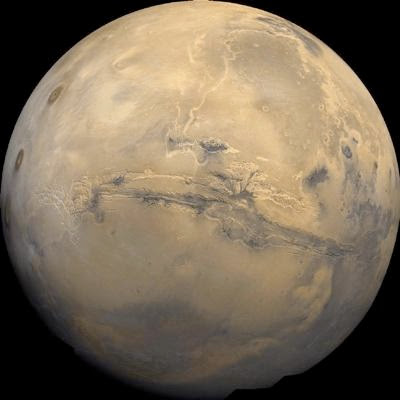
Mars

A terrestrial planet with a thin atmosphere, Mars has surface features reminiscent both of the impact craters of the Moon and the volcanoes, valleys, deserts and polar ice caps of Earth. It is the site of Olympus Mons, the highest known mountain in the solar system, and of Valles Marineris, the largest canyon. In addition to its geographical features, Mars’ rotational period and seasonal cycles are likewise similar to those of Earth.


6. Jupiter
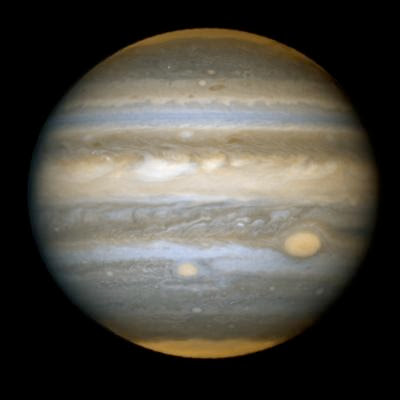
Jupiter

Jupiter is the largest planet within the solar system. It is two and a half times as massive as all of the other planets in our solar system combined. The plane is primarily composed of hydrogen with a small proportion of helium; it may also have a rocky core of heavier elements. Because of its rapid rotation the planet is an oblate spheroid.


7. Saturn
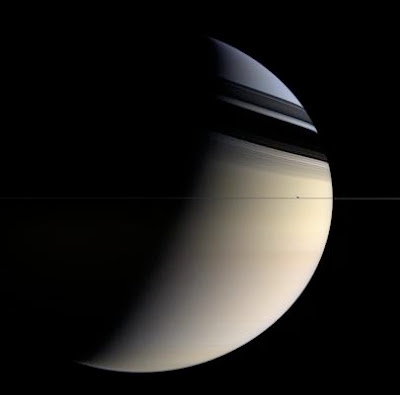
Saturn

Saturn is the second largest planet in the Solar System, after Jupiter. Along with the planets Jupiter, Uranus, and Neptune, it is classified as a gas giant. The planet Saturn is primarily composed of hydrogen, with small proportions of helium and trace elements. The interior consists of a small core of rock and ice, surrounded by a thick layer of metallic hydrogen and a gaseous outer layer.


8. Uranus
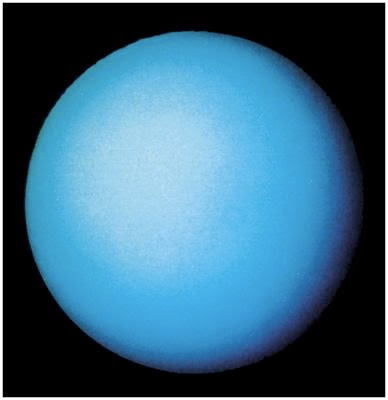
Uranus

Uranus is third largest planet in the solar system. It was the first planet discovered in modern times. It is visible to the naked eye like the five classical planets, but it was never recognized as a planet by ancient observers due to its dimness. Like the other giant planets, Uranus has a ring system, a magnetosphere, and numerous moons.


9. Neptune
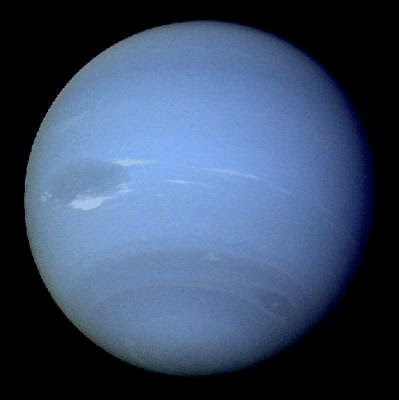
Neptune

Neptune is the eighth and farthest known planet from the Sun in the Solar System. It is the fourth largest planet by diameter, and the third largest by mass; Neptune is 17 times the mass of Earth. Neptune’s atmosphere is primarily composed of hydrogen and helium, with traces of methane that account for the planet’s blue appearance. Neptune’s blue colour is much more vivid than that of Uranus, which has a similar amount of methane, so an unknown component is presumed to cause Neptune’s intense colour.


10. Pluto
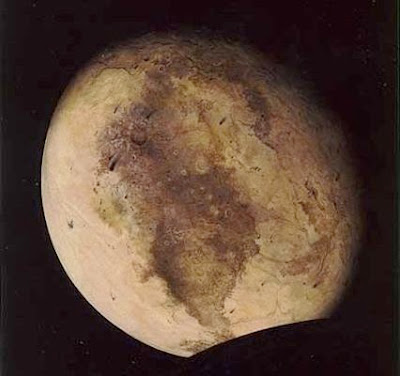
Pluto

I don’t care if it was demoted recently – I grew up with it as a planet so I am including it! This is an artists impression as we don’t have any high resolution photos of Pluto yet. Originally considered a planet, Pluto is now recognised as the largest member of a distinct region called the Kuiper belt. Like other members of the belt, it is primarily composed of rock and ice and is relatively small; approximately a fifth the mass of the Earth’s Moon and a third its volume.


Extra : The Moon
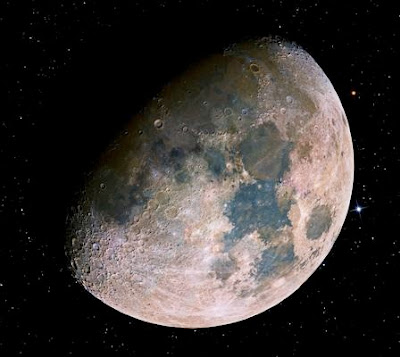
Moon
A Stunning Hi-Res image of Lunar, the earth’s moon. The color hues you see are an exaggeration – they are caused by the minerals under the surface.

[Source : Listverse]
Here are some beautiful images of outer space. I have tried to keep the images as large as possible so they can be used for desktop wallpapers. Click the image for the larger view.

1. The Pillars of Creation

The Pillars of Creation
The pillars are columns of cool interstellar hydrogen gas and dust that double as incubators for new stars. The pillars have been carved out and are illuminated by ultraviolet light coming from hot, massive newborn stars that are unseen, above the top of the photo.


2. Mercury in Transit

Mercury in Transit

What better way can we truly appreciate the size of our Sun than to see one of the planets in transit?


3. Supernova

Supernova

This is a photograph taken by the Hubble Telescope.


4. The Eskimo Nebula

The Eskimo Nebula

A wonderful explosion of colour (in Gemini) as an old star dies leaving a central tiny, hot, White Dwarf and several layers of exploding gas (NASA, Hubble)

A nebula (from Latin: “mist”; pl. nebulae or nebulæ, with ligature) is an interstellar cloud of dust, hydrogen gas and plasma. It is the first stage of a star’s cycle.


5. The Catseye Nebula

A nebula (from Latin: “mist”; pl. nebulae or nebulæ, with ligature) is an interstellar cloud of dust, hydrogen gas and plasma. It is the first stage of a star’s cycle.

The Catseye Nebula

A nebula (from Latin: “mist”; pl. nebulae or nebulæ, with ligature) is an interstellar cloud of dust, hydrogen gas and plasma. It is the first stage of a star’s cycle.


6. A collection of Galaxies

Iridescent Glory of Nearby Helix Nebula

A stunning collection of galaxies – courtesy of the Hubble telescope


7. Exploding Star

Interacting Spiral Galaxies NGC+2207 and IC 2163

Amazing photo of a string of pearls surrounding an exploding star


8. Detail of Saturn’s Rings and Shadow

Exploding Star

The rings of Saturn are a series of planetary rings that orbit the planet Saturn. They consist largely of ice and dust particles.


9. Interacting Spiral Galaxies NGC 2207 and IC 2163


Spiral galaxies are named after the arms that extend—roughly logarithmically—from the bulge.


10. Iridescent Glory of Nearby Helix Nebula

A collection of Galaxies

The Helix Nebula (also known as NGC 7293) is a planetary nebula (PN) about 650 light-years away in the constellation Aquarius. It is one of the closest planetary nebulae to Earth.

[Source : Listverse]
0
Dengan sebatang rokok dan segelas kopi hangat ku duduk disini, menatap taburan bintang dilangit, mengagumi kemerlipnya yang saling bergantian.
Hamparannya begitu luas, memberikan suatu ketenangan tersendiri. Begitu agungnya ciptaan dari sang Maha Kuasa.

Ketika tiba-tiba si Merah 'Mars' muncul perlahan, memperlihatkan dirinya yang gagah, besar dan mungkin disana lebih tenang tanpa hiruk pikuk semrawut seperti bumiku saat ini.

Kalian membentuk suatu rangkaian gambar yang sudah tak asing lagi terpampang dibuku-buku astronomi yang harganya selangit.
Disini, ku tak perlu bersusah payah membelinya, hanya dengan bermodalkan sebatang rokok cap Dji Sam Soe dan segelas Kopi Hangat kudapat menyaksikan keindahan alam malam ini.

the color of plants, plants of color, plants on world, colors on worlds, worlds Key Concepts
  • What color will alien plants be? The question matters scientifically because the surface color of a planet can reveal whether anything lives there—specifically, whether organisms collect energy from the parent star by the process of photosynthesis.
  • Photosynthesis is adapted to the spectrum of light that reaches organisms. This spectrum is the result of the parent star’s radiation spectrum, combined with the filtering effects of the planet’s atmosphere and, for aquatic creatures, of liquid water.
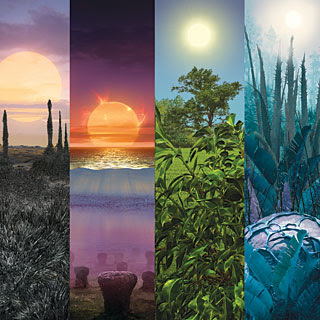
  • Light of any color from deep violet through the near-infrared could power photosynthesis. Around stars hotter and bluer than our sun, plants would tend to absorb blue light and could look green to yellow to red. Around cooler stars such as red dwarfs, planets receive less visible light, so plants might try to absorb as much of it as possible, making them look black.
The prospect of finding extraterrestrial life is no longer the domain of science fiction or UFO hunters. Rather than waiting for aliens to come to us, we are looking for them. We may not find technologically advanced civilizations, but we can look for the physical and chemical signs of fundamental life processes: “biosignatures.” Beyond the solar system, astronomers have discovered more than 200 worlds orbiting other stars, so-called extrasolar planets. Although we have not been able to tell whether these planets harbor life, it is only a matter of time now. Last July astronomers confirmed the presence of water vapor on an extrasolar planet by observing the passage of starlight through the planet’s atmosphere. The world’s space agencies are now developing telescopes that will search for signs of life on Earth-size planets by observing the planets’ light spectra.

Photosynthesis, in particular, could produce very conspicuous biosignatures. How plausible is it for photosynthesis to arise on another planet? Very. On Earth, the process is so successful that it is the foundation for nearly all life. Although some organisms live off the heat and methane of oceanic hydrothermal vents, the rich ecosystems on the planet’s surface all depend on sunlight.

Photosynthetic biosignatures could be of two kinds: biologically generated atmospheric gases such as oxygen and its product, ozone; and surface colors that indicate the presence of specialized pigments such as green chlorophyll. The idea of looking for such pigments has a long history. A century ago astronomers sought to attribute the seasonal darkening of Mars to the growth of vegetation. They studied the spectrum of light reflected off the surface for signs of green plants. One difficulty with this strategy was evident to writer H. G. Wells, who imagined a different scenario in The War of the Worlds: “The vegetable kingdom in Mars, instead of having green for a dominant colour, is of a vivid blood-red tint.” Although we now know that Mars has no surface vegetation (the darkening is caused by dust storms), Wells was prescient in speculating that photosynthetic organisms on another planet might not be green.

Even Earth has a diversity of photosynthetic organisms besides green plants. Some land plants have red leaves, and underwater algae and photosynthetic bacteria come in a rainbow of colors. Purple bacteria soak up solar infrared radiation as well as visible light. So what will dominate on another planet? And how will we know when we see it? The answers depend on the details of how alien photosynthesis adapts to light from a parent star of a different type than our sun, filtered through an atmosphere that may not have the same composition as Earth’s.

Harvesting Light
In trying to figure out how photosynthesis might operate on other planets, the first step is to explain it on Earth. The energy spectrum of sunlight at Earth’s surface peaks in the blue-green, so scientists have long scratched their heads about why plants reflect green, thereby wasting what appears to be the best available light. The answer is that photosynthesis does not depend on the total amount of light energy but on the energy per photon and the number of photons that make up the light.

Whereas blue photons carry more energy than red ones, the sun emits more of the red kind. Plants use blue photons for their quality and red photons for their quantity. The green photons that lie in between have neither the energy nor the numbers, so plants have adapted to absorb fewer of them.

The basic photosynthetic process, which fixes one carbon atom (obtained from carbon dioxide, CO2) into a simple sugar molecule, requires a minimum of eight photons. It takes one photon to split an oxygen-hydrogen bond in water (H2O) and thereby to obtain an electron for biochemical reactions. A total of four such bonds must be broken to create an oxygen molecule (O2). Each of those photons is matched by at least one additional photon for a second type of reaction to form the sugar. Each photon must have a minimum amount of energy to drive the reactions.

mozzila firefox, firefox, hubble, hubble fox


Behold! The Firefox logo as seen in variable star V838 Monocerotis of the constellation Monoceros. I had Monocerotis one summer and it was NOT fun. I still get residual rashes from time to time and I can feel it in my joints when it’s about to rain.