
Pages

Showing posts with label i-Net. Show all posts
0
EFTPS

EFTPS – A Safe Strategy to Pay All your Federal Taxes

EFTPS, the Electronic Federal Tax Payment System, is often a tax payment system provided free of charge by the U.S. Department of Treasury. Pay federal taxes electronically by means of the internet or mobile phone 24/7.

Businesses and Individuals can pay all their federal taxes employing EFTPS. Individuals can pay their quarterly 1040ES estimated taxes electronically employing EFTPS, and they could make payments weekly, month to month, or quarterly. Each business and individual payments can be scheduled upfront. ( Readmore... )

EFTPS – A Secure Approach to Pay All of your Federal Taxes

EFTPS, the Electronic Federal Tax Payment System, is a tax payment system furnished no cost by the U.S. Department of Treasury. Pay federal taxes electronically via the world wide web or cellphone 24/7.

Businesses and Individuals can pay all their federal taxes using EFTPS. Individuals can pay their quarterly 1040ES approximated taxes electronically using EFTPS, plus they could make payments weekly, monthly, or quarterly. The two business and individual payments can be scheduled in advance. ( Readmore... )

M86 Spots Scam EFTPS E-mails

Security investigators from M86, the security company, caution Web-surfers that a fresh surge of bogus e-mail, purporting to be from EFTPS (Electronic Federal Tax Payment System), is presently hitting their inboxes. ( Readmore... )

Related Searches:
eftps.gov, www.eftps.gov

Courtesy : American News BUZZ , All4freehere & Spam NEWS
Birthday Google Doodle

Whenever Google rolls out one of its quirky homepage redesigns, it's usually in commemoration of some famous event or celebrity birthday. Now, though, the search engine has decided to offer a special birthday doodle to each of its users -- even non-celebrity schmucks like us.

To get your very own birthday doodle surprise, you'll have to first add your birthday to your Google Profile, and make sure that you sign in to the service on your big day. Once you've signed in, you can head over to the Google homepage, where you'll find a festively designed doodle, replete with a cupcake, wrapped virtual gift and streamers. Clicking on the logo will send you to your Google Profile, where you'll find a special message from Google, congratulating you on making it this far without dying. Older users, of course, may not appreciate being reminded of their age, but others will certainly enjoy pretending that they ruled Google's homepage -- even if it's just for one day on one computer.

[Source]
5 Online Pitfalls That Destroy Students

Kids have always loved to mix it up with a little school-time tomfoolery, whether it's streaking at a football game or leaving a flaming bag of poop on a teacher's doorstep. But in the digital age, the mischief has moved online. What may seem like harmless virtual-reality hijinks can have devastating real-world consequences. Switched consulted sociologist Carrie James of Harvard's GoodPlay Project, who recently conducted a study that examined the online behaviors of and dilemmas confronted by 60 kids aged 15 to 25. With her help, we've come up with the top five online ethical pitfalls that can ensnare today's students (and plenty of adults, too). If you're in school, ignore them at your own peril. And if you're the parent of a pupil, read on and remember with fondness the simpler, olden days.

5. Using Your Phone in Class

Using Your Phone in Class

The Dilemma: Something just popped into your noggin so deeply, hilariously, awesomely interesting that it must be communicated to a friend. Now. Only, you're in chemistry class.

The Pitfall: "Internet-enabled portable devices and mobile phones are always in the classroom and kids have very savvy ways of hiding them under their desks," James says. Sure, we'll grant that blind-texting is an admirable feat, as is learning how to breach the school's firewall to let IMs and Facebook through. But, unless you're passing along the cure to cancer, we're pretty sure your deep thoughts can wait till after class.

The Penalty: The debate in schools over kids' right to possess cell phones still rages on, but it's kind of beside the point. Get caught texting or, worse, taking a call, and you're either going to lose your phone, get detention, be suspended, or -- at the very least -- get an ass-chewing. From a more practical side, you'll also get lower grades. So go ahead, send that ROFL text now, and look forward to a future manning the deep fryer.

4. Posting Inappropriate Content

Posting Inappropriate Content

The Dilemma: Sometimes, your idea of having fun means doing things that are against the rules. Like when you drunk-Sharpied your roommate, or rode your BMX bike naked through the Home Depot parking lot. Naturally, you have to record these things for posterity's sake and share them with interested parties (i.e., the entire world).

The Pitfall: The funny thing about the Internet, as we've said a million times before, is that it's instant, it's everywhere, and it's eternal. "I think it's one of the most common issues that students face," says James, "and a surprising number do nothing to adjust their privacy settings -- or change their behavior." So that photo of you puking off a balcony that you posted to Facebook is just a few mouse-clicks away from being a featured Digg photo and being enjoyed by millions across the globe, including your peers, teachers, newscasters, potential bosses, and romantic partners. You see where this is going?

The Penalty: Expulsion. Suspension. Arrest. Irreparably damaged relationships. We don't have enough space to list all of the damage done by careless postings, but to name a couple recent ones: those hilariously homoerotic State Department guards, and these suspended doctors and nurses.

3. Dissing a Teacher Online
Dissing a Teacher Online

The Dilemma: Some teachers are not only soul-crushingly boring, but needlessly harsh graders. And, well, they're jerks to boot. It is your personal mission to save future students from your fate.

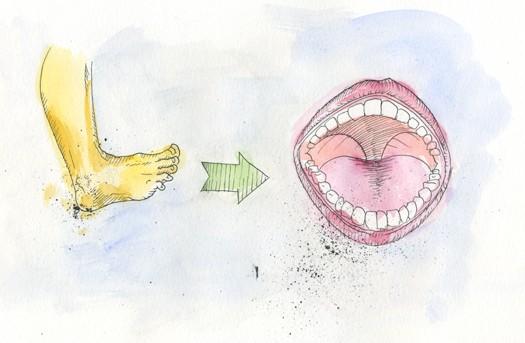
The Pitfall: The temptation to slam a teacher is met by a digital word that has made it incredibly easy to sound off on social networking sites and even dedicated teacher-rating services. In one of James's studies, she noted, "There were always a handful of students who felt like the Internet is a different place and you can do whatever you want -- that's what it's for and if people don't like it, they just have to deal." The funny thing about public outbursts, though, is that they're public. And with the Internet, they're not only spread around the world in an instant, but they'll also likely exist forever. Couple that with the fact that Internet anonymity is really a myth, and suddenly your little Facebook crack about Mr. Harrison's hairy crack can have devastating consequences.

The Penalty: If you're lucky, your jibe about a teacher might just end with an embarrassing public apology and the torture of having to look the teacher in the eye every day after that. If you're unlucky, you could end up in court fighting off a libel case: Like the couple sued by a dentist over a negative Yelp review, or the blogger who was publicly identified by Google after calling an acquaintance a "skank." Either way, it isn't pretty. If you must comment online, be fair, be truthful, and don't get personal.

2. Borrowing Work

Borrowing Work

The Dilemma: The clock is ticking and your research paper on 19th-century Welsh farming techniques is nearly due, but you just don't feel like buckling down for an all-nighter.

The Pitfall: Sites like Cramster and Course Hero are the modern equivalents of term-paper services that once were advertised in the back of magazines. Which is to say they're an updated form of cheating. And we don't have to point out that cutting and pasting from Wikipedia is problematic both because it's so error-ridden, and because you're taking others' ideas and claiming them as your own. "Plagiarism is a huge problem. No one [in the study] admitted to us that they had done it," James says. "But other studies [show] that plagiarism and cheating is on the rise. Very few, if any, students talk about the importance of credit for the original writer of materials."

The Penalty: The irony of the digital age is that just as it has become incredibly easy to cheat, it has become even easier to detect. Teachers these days have a pretty effective arsenal of tools at their disposal for detecting plagiarism -- from online services, to downloadable software that scans the Web, to perusing those cheating sites themselves. In high school, plagiarism usually gets you an F for the class, and, in college, you can get the boot after just the first offense.

1. Illegal Downloading

Illegal Downloading

The dilemma: You just gotta get that song, that TV show, that movie, whatever -- but you don't want to dip into your hard-earned beer fund.

The Pitfall: You could hit Pandora for a quick listen, or Hulu for a free watch, but there's nothing like an all-expenses-paid trip to Torrentland, where you can guzzle down a few gigs and share your collection of rare Muppets records with like-minded enthusiasts. "There's a sense by many kids that they're little fish in a big sea and so won't get caught," says James, citing the findings of her study. "Despite the fact that it's illegal, it's what youth culture endorses."

The Penalty: Well, kiddo, hate to break it to you, but any time you take a product without paying for it, you're stealing. It doesn't matter what philosophical argument you make, either, as the law has recently come down squarely on the side of content owners. Just ask the woman who has to pay $1.9 million for downloading just 24 songs. Or the gods of file-sharing themselves, the Pirate Bay guys, who were sentenced to a year in the pokey and a $3.54 million fine. The next time the siren call of free tunes beckons, remember that you could quite easily end up in massive, crippling debt for life.

Illustrations by Camille Altay.

[Source]
Deleted Facebook PhotosFacebook may be making strides in some areas of privacy, but the company is still struggling when it comes to deleting user photos—or not deleting them, as the case may be.

We wrote a piece more than a year ago examining whether photos really disappear from social network servers when you delete them, and found that Facebook was one of the worst offenders when it came to leaving "deleted" photos online. We decided to revisit the issue recently when readers continued to point out that our deleted photos from that article were still online more than 16 months later. Indeed, this old photo of me remains on Facebook's content delivery network (CDN) servers, despite being deleted on May 21, 2009.

When we originally inquired with Facebook in 2009 about this, the company tried to tell us that deleted images were inaccessible even though they were on the server (a statement that's obviously false if you have a direct link to the image file, as we do). Simultaneously, Facebook told Ars that it was "working with" its CDN partner to "significantly reduce the amount of time that backup copies persist."

The company, it turns out, is mostly sticking to that party line. "For all practical purposes, the photo no longer exists, and we wouldn’t be able find it if we were asked or even compelled to do so," Facebook spokesperson Simon Axten told Ars via e-mail this week. "This is similar to what happens when you delete information from the hard drive of your computer."

Facebook does acknowledge now that the photos are technically accessible by some people, but basically repeats the line about working with the CDN. "It's possible that someone who previously had access to a photo and saved the direct URL from our content delivery network partner could still access the photo," Axten said. "However, again, the person would have to know the URL, and the photo only exists in the CDN's cache for a limited amount of time. We're working with the CDN to reduce the amount of time that the photo remains in its cache."

It seems we haven't quite found the limits of that "limited amount of time" just yet—after all, 16 months is quite a while. The other social networks in our original report have all removed our images from their servers by now, and Facebook is the lone holdout.

We'll keep checking up with Facebook to see if and when the situation gets improved, but in the meantime, we're sticking with our original party line too: if you don't want to give your enemies blackmail material, don't upload questionable photos in the first place. If you've already uploaded such photos and tried to delete them, then keep your fingers crossed that no one has the direct URLs saved somewhere.

Update (Oct. 12): After widespread coverage of this particular problem, Facebook has apparently removed my "deleted" photo from its CDN server. However, as far as we're aware, this problem is still in place for all other Facebook users who don't have the privilege of drawing widespread attention to the problem like we do. I've deleted another couple of photos from my Facebook profile in order to keep watching the issue.

Update 2: Ars reader Andrew Bourke e-mailed to say that a family member uploaded a semi-nude photo of his son and then deleted it more than 2.5 years ago (we agreed not to link it directly for privacy reasons). The photo still remains on Facebook's CDN servers today, despite repeated requests to Facebook to have the photo removed. Another reader named Filippo e-mailed to say that he deleted this photo in April of 2009, which also remains on the servers today.

Update 3: Facebook spokesperson Simon Axten checked back in with us after our latest updates above and said that the company is actively working with its CDN on this issue. "We're currently working with the CDN on a fix that will delete photo and video content from the CDN's cache shortly after it's removed on Facebook," Axten said. "The fix is already in place for videos, and we hope to implement it for profile pictures and photos in the coming weeks."

[Source]
BadBoy Anti Spam Automatic ReporterBadBoy history/description :

With the introduction of the Blizzard chat throttle added in WoW v4, BadBoy has removed the code for throttling chat and for filtering ASCII art. On top of that I'm hoping the floating spam bots have been fixed so I've removed the sleep emote filter.

BadBoy is now once again a nice and simple gold/hack/phishing/casino blocker & reporter. However I will adapt this addon if people find new ways to get past Blizzard's code.

Can I configure it?

Type /badboy ingame

What sets this aside from other spam blockers?

BadBoy was created with a focus on assisting Blizzard and the user with spam removal, whilst being a light and efficient addon.

[Source]
Mediatakeout, Site Crash
The site Mediatakeout.com is the sixth most popular search on Google Trends and thanks to posts on Alicia Keys, Bishop Eddie Long, and Rapper T.I. Makes you want to visit the site, right?

Well, now you can't. Apparently, as of this writing at 11:32 AM PDT, Mediatakeout.com, a site that focuses on gossip about African American (black) celebrities, can't handle the sudden traffic load. A visit to the website brings this message:


Database Error!
Can't open file: './mediatak_stories/news_views.frm' (errno: 24)


Yikes. That means at the time it matters the most, Mediatakeout.com can't take advantage of the Internet attention its created for itself. Is the problem fixed? Let's refresh the screen and find out...

It's taking a long time to load. In, fact, it's still loading as these last two sentences have been written. And it's still going. And still going. And the same problem appears.

The that's too bad, because when it's working, Mediatakeout.com has some of the most provocative titles on the Internet. For example, "MTO EXCLUSIVE: Beyonce's PREGNANT!!! - MediaTakeOut.com™ 2010," or "OHHHH SNAP!!! There's A Nicki Minaj SEXTAPE!!! - MediaTakeOut.com", or "FALLING OUT!!! Jay Z UPSET With The Way LeBron Handled FREE AGENCY," grab eyeballs and curiosity.

But for Mediatakeout.com to not be able to handle the traffic load is a major fail.

[Source]
One day, like today…A Robotic cat will be born…It is from the future and its name is Doraemon (ドラえもん). The day? September 3, 2112! Doraemon celebrates its birthday and for the special ocassion, Google Japan placed this lovely cat within their logo.

Google Doodle, Google Japan, Doraemon, Doraemon Birthday 40

In 2009, Doraemon celebrates 40 years since the manga was first published and 30 years since the beginning of the anime series produced by Shin-Ei Animation…That’s quite a long time ago…Almost as old as the Gundam!…Robots gets cool with time indeed!

[Source]
Orkut, Bom SabadoJust few days after the social networking site Twitter attacked by virus which sent its followers to porn sites, another popular networking hub Orkut also affected by virus.

Orkut, which is very popular in India, has been hit by a worm
named 'Bom Sabado', which means 'Good Saturday' in Portuguese. Analysts told that the virus attacked the XSS (cross-site scripting) of the site. This virus posted scraps to the Orkut users with the text Bom Sabado and is sent to the users account by the name of the other friends account. Making it more severe the worm also adds affected users to new Orkut groups.


The security experts warned the users not to not log into their Orkut account until the problem gets solved. Users also asked not to click on any suspicious links.

Earlier on Sep 2010, the most popular social networking hub with more than 500 million users, Facebook, also faced networking glitches due to an outside technical problem. It was Facebook's most tragic outrage in its history.

[Source]
Google Instant SearchGoogle has rekindle its love for speedy Web searches with Google Instant, a new version of the search engine that displays results as you type.

When typing a search query with Google Instant, results appear after the first letter is entered, and they update as the user types. Marissa Mayer, Google's vice president of search and user experience, said results are actually delivered "before you type," because Google Instant predicts and automatically completes search terms.

According to Google, a typical searcher spends nine seconds entering a query, and 15 seconds searching for answers. Google hopes to shave two to five seconds per search using Google Instant.

Google Instant SearchesGoogle claims that Instant won't considerably slow down Internet connections, because the amount of data delivered for search terms is relatively small, and because the system only sends parts of the page that change when more typing alters a search result. For connections that are already slow, Google Instant automatically turns off, and users can also shut off the service through their user preferences or by clicking the drop down box to the right of the search bar.

Google Instant is rolling out today in the United States, and works in Chrome, Firefox, Internet Explorer 8 and Safari. More information is available at Google's Website, where users can try the service and set it as their home page. Users in the United Kingdom, France, Italy, Germany, Spain and Russia will get Google Instant over the next week.

Mobile access to Google Instant is planned, but not available now.

Here is a video that demonstrates the ABC's of Google Instant


[Source]
0
Google Translate

If you are a Google Translate user, you may have seen that, starting from yesterday, the provided service is a lot easier to use.

From what we’ve seen, this service is translating instantly. This means that, while you are typing, you get the translation for each word instantly, without having to press any other button. Though, you still have to select what languages would you like to use.

Google implemented some large lists of words, therefore, the chances of not getting what you need, will decrease seriously. In fact, 98% of the Internet users can get the proper translation, because Google has a large vocabulary for about 51 languages.

Also, they have implemented a new feature called text-to-speech. This will allow users to hear actually what they are translating.

And, according to Awaneesh Verma, Product Manager for this service, Google will update monthly the database, in order to satisfy its user needs.

[Source]
  • Self-view exclusion: You can now exclude your own visits by clicking on “Don’t track your own pageviews” link on the Stats | Overview page. We’re also now excluding traffic coming from Blogger admin admin pages and post Preview, providing more accurate pageview data.
  • More effective bot traffic filtering. We’ve made several improvements to detect “bots” (the non-human visitors, such as crawlers) including extending our list of known “bots” to provide more accurate pageviews from real visitors.
  • Internationalization. Now Blogger Stats is available in more than 40 languages.
Although some of you use Google Analytics or other third party tools to track your blog traffic, many of you have requested an easier-to-use, fully-integrated stats feature for Blogger. We heard that, and we are excited to announce that Blogger in Draft now has built-in stats. Just go to Blogger in Draft, and you'll notice a new "Stats" tab. You don't have to install or configure anything to start benefitting from Stats.

The coolest thing about the new Blogger Stats is that it monitors and analyzes your visitor traffic in near-real-time. You can see which posts are getting the most visits and which sites are sending traffic to your blog right now. For example, if a reader shares one of your blog posts on Twitter and the post is getting lots of clicks, you will see a traffic increase in Blogger Stats almost instantly, with the particular Tweet mentioning your post being identified as the traffic source. Of course, traffic data across longer time periods (day/week/month) and all-time historical data are available as well.

Blogger Stats

There's also a lot more data that's being tracked, such as popular search keywords that send visitors to your blog, which country your visitors come from, and which web browsers they are using. Basically, with the new Stats feature, you know what's going on with your blog right now.

The new Stats feature shows all of this data in a simple, easy-to-understand graphical user interface. Since Stats are part of Blogger, you don't have to sign up for another service, or embed any code in a gadget.

Additionally, if you want the enterprise-level power and flexibility of Google Analytics, you can still use it, as outlined in this Help Center article. Note that the pageview data in Blogger Stats and in Google Analytics may not be identical, due to different collection mechanisms used. Also, Blogger Stats do not support private blogs for now.

Check out the new Stats feature now, and let us know what you think.

[Source]
0
Do you guys know about this? Are you all Malaysians aware of this?

Najib Buka Puasa
I mean like hey Google is threatening our national security. We should ISA everyone in Google okay, TM should ban and filter anything that is related to Google, it’s humiliating. Our dear prime minister’s reputation is on stake now.

Do we still allow Google to mock us? Come on, bring up the 1 Malaysia spirit and boycott Google!!

WE should learn from China, the Chinese who don’t give a damn about Google!!

Oh wait we Chinese are pendatang…

Najib Buka Puasa

Okay la cut the crap, all written above is crap and i’m a crappy person so yah oh back to this thing, it was actually brought up earlier today as i saw it on twitter whichiforgotwho already and it was spread rapidly which eventually leads to a topic being created at LowYat.net as well. Nobody have a single clue on why Google Search Engine came up with that suggestion but one thing i’m sure of..

Our BELOVED Prime Minister is a human...

[Source]
Porn Site

North Sumatra University sociologist Badaruddin has urged the government to permanently block porn sites in the internet and not only during the Ramadan fasting month.

It is expected that the porn sites will no longer appear in the internet permanently in Indonesia,” Badaruddin said in Medan, North Sumatra, on Monday evening as quoted by the Antara news agency.

Badaruddin, who is also a lecturer at the university, made the remarks in response to a recent statement by Minister of Information and Communication Tifatul Sembiring that up to four million porn sites will be blocked as soon as possible.

The plan will be done following an agreement between the government and all internet service providers in the country. “All internet providers have agreed to block the porn sites in the internet,” Tifatul said.

According to data at the ministry of information and communication, all 200 companies handling the internet services agreed earlier to block the port sites before Ramadan.

Badaruddin said that the closure of the porn sites has helped reduce the number of adolescent and school students from opening the pornographic pictures which tend to cause losses to them.

The closure of the porn sites enables students to open the internet in search for learning materials related to school assignments, he said.

Previously many of students, who went to the internet stalls, simply wanted to open the sites with pornographic contents.

“If such a condition is left without any control, it will not only disturb their studies, but also damage their morality and mentality as a new generation of the country,” he added.

[Source]
0
Wordpress PluginMany bloggers are using WordPress and with good reason. It is the most popular blogging software in use today and one of the biggest reasons is the ability to add functionality through the use of plugins. Plugins can turn your run-of-the-mill blog into a high powered online tool capable of bringing traffic and profit to your site. Consider using the top WordPress plugins on your current WordPress blog or on a future blog. You won’t be disappointed. Happy Blogging.

7. Page Mash

This is a simple WordPress page management plugin. The Ajax interface allows you to drag-and-drop the pages into the order you like, modify the page structure by dragging a page to become a child or parent and toggle the page to be hidden from output. You can also see the id of the page which is often helpful for theme developers. If you have a WordPress site with more than just a handful of pages, PageMash is extremely helpful.

Visit PageMash simple WordPress page order management.


6. All in One SEO Pack

The All in One SEO Pack plugin automatically optimizes your WordPress blog for Search Engine by allowing you to fine tune things like your page title and meta tags. This plugin is extremely easy to use as it works great straight out of the box. If you are an advanced user, you can customize virtually everything. And if you are a developer, this plugin has an API so your themes can access and extend the functionality of the plugin.

Visit All in One SEO Pack


5. Google XML Sitemaps

Perhaps the most downloaded WordPress plugin, the Google XML Sitemaps plugin not only automatically creates a site map linking to all your pages and posts, it also notifies Google, Bing, Yahoo, and Ask.com when you make changes to you site. If you want to include pages that are part of your site but not part of you WordPress managed content, you can do that to./p>

Visit Google XML Sitemaps Generator


4. WP Super Cache

If you have a popular WordPress website you should seriously consider running WordPress Super Cache to improve the performance of your website. If you are not caching your pages, then every time a visitor comes to your site, WordPress has to pull together various pieces of information out of a database to put your page together. If you have a high traffic site, this is can really become a problem. WP Super Cache will store a copy of each of the pages on your website so that after the page has been assembled from the database once, WordPress can rest and just keep serving the static html copy of the page. This might be a bit techie, but the idea is you can dramatically speed up your site and reduce the load on your server by using WP Super Cache. If for no other reason, use this plugin so you don’t have to panic when your friend says, “I just Dugg your site.”

Visit WP Super Cache to make WordPress faster


3. NextGEN Image Gallery

If you want to display a photo gallery, show a series of product images, or just publish a slide show from your most recent vacation, the NextGEN image gallery is the plugin for you. NextGEN Gallery is a full integrated Image Gallery plugin for WordPress with a Flash slideshow option. Among the many features, NextGEN Gallery includes a thumbnail generator, sortable albums, and a water mark function. There are also plenty of add-ons as well including the NextGEN FlashViewer and NextGEN ImageFlow.

Visit NextGEN Image Gallery


2. cformsII Form Plugin

If your looking for a free form management plugin, cformsII is an extremely powerful plugin for setting up contact forms on your WordPress site. You don’t need to know any PHP or write any code. You can visually build forms in the WordPress admin panel. Then, navigate to the page or post where you want to use the form and there is a button in the WYSIWYG editor that you click and up pops a list of forms that you have made. Simply click on the one you want and your form is inserted into your page. Update your page and you the form is live. You can specify required fields, default values, and there are plenty of styles to make your form blend in perfectly with your site.

Visit cformsII WordPress Form Plugin


1. Gravity Forms

If you want the best forms plugin WordPress has to offer, you need Gravity Forms. Gravity Forms is an amazing plugin for managing online forms. Some of the incredibly useful features include conditional form fields which means you can show or hide a field or entire sections of the form based on a value selected in another field. You can pre-populate form fields using querystring, shortcode, function or hooks.You can even schedule when forms are available by assigning a start date and end date for when your form is live on your site. Supposed you want to run a contest where the first 50 people that fill out the form win a prize. Gravity Forms lets you set a limit on the number of entries a form can receive. Pretty much anything you ever wanted a form to do, Gravity Forms can do it.

Written by Lee Blue, a WordPress plugin developer, who has written is own top plugin, PHPurchase, a Shopping Cart WordPress Plugin.

[Source: Makethelist]
Sinta dan JojoBerkali-kali isu yang ramai diperbincangkan di dunia internet langsung direspons serupa di dunia nyata. Ada empat alasan mengapa tema hangat di dunia maya juga akan menjadi perbincangan besar di dunia nyata.

"Pertama, isu yang dilempar harus ada korban," kata blogger Enda Nasution dalam seminar "Politik dan Bisnis Media Baru", Hotel Nikko, Jakarta, Rabu 4 Agustus 2010.

Untuk alasan pertama ini, kata Enda, isu yang mengemuka harus memiliki korban. Karena, ketika ada sosok yang menjadi korban namun diyakini khalayak tak bersalah, maka ia akan mudah menjadi isu yang besar di dunia maya. Setelah itu pasti akan diikuti dunia nyata.

"Kedua, bantuan media mainstream seperti media nasional, cetak, radio, online, hingga televisi," kata Ketua Panitia Pesta Blogger pertama tahun 2007 ini.

Enda menilai, hubungan blogger atau pengguna microblogging Twitter dan pers di Indonesia sejauh ini sangat baik. Kondisi ini berbeda dengan di luar negeri.

"Pasalnya, blogger dan pers memiliki visi yang sama, memperjuangkan sesuatu yang dianggap benar," ujar pria yang pernah meraih The Hottest Creative Person se-Asia oleh Campaign Brief Asia untuk tahun 2002 dan 2003 ini.

Alasan Ketiga adalah konten atau isi. Enda berpendapat, kunci pesan yang disampaikan dalam isu itu harus kuat. Idenya bisa menangkap kebutuhan dan kepentingan publik.

"Keempat, peran social media sebagai alat untuk menyebarkan pesan ke orang banyak atau khalayak. Misalnya, Facebook Groups, Twitter dengan hastag (#) tertentu, SMS, dan sebagainya," jelasnya.

Ada beberapa kasus yang ramai diperbincangkan di dunia nyata yang berangkat dari isu di internet. Isu itu antara lain kasus Prita Mulyasari, video porno Ariel 'Peterpan' dan yang terakhir adalah fenomena 'Keong Racun' dari Sinta dan Jojo. (umi)

[Source]
Jojo dan Sinta
Setelah video 'Keong Racun' Jojo dan Sinta menyeruak di YouTube, grup Facebook mereka pun mulai diserbu penggemar. Bermula dari 200 penggemar, kini grup tersebut dipadati sekitar 500 fans.

Pantauan detikINET, sekitar pukul 12.00 WIB, Selasa (23/6/2010) Grup Fans Facebook Keong Racun Sinta dan Jojo tersebut kini memiliki 4.239 penggemar (* update). Beberapa dari mereka memberi masukan positif kepada dua berwajah manis tersebut.

"Sinta dan jojo yang mumut...cobalah kalian tiru Kim Yeo-hee sang Apple Girl, dari merebut perhatian publik lewat YouTube, kini dia bener2 jadi artis.... sukses yaws rock on gals," ujar facebooker bernama Sunu Trihatmaji menasehati.

"Sinta and Jojo, sang fenomena duo maut belakangan ini..... Hmmm... konsep yg menarik, tp masih menarik moymoypalaboy (apalagi rambut n muka c roadfill itu, gokil abis....)," ujar facebooker lain bernama Deri Saputra.

Sebagai informasi, beberapa perilaku 'narsis' sejenis juga terjadi di beberapa belahan negara lain. Tengoklah Moymoy Palaboy dari Filipina, atau si cantik bersuara merdu dari Korea, Kim Yeo-hee yang kini mendapat julukan Applegirl. ( fw / wsh )

[Source]
0
Gameloft

Game pasokan Gameloft banyak diunduh di ponsel berbasis Java dan BREW.


Siapa sangka industri game sedang terkapar? Faktanya industri mainan digital ini justru mengalami kemajuan pesat. Terlebih ketika industri telekomunikasi mengalami perubahan paradigma, mengubah ponsel menjadi perangkat akses data. Maka yang terjadi adalah memacu pertumbuhan industri game mobile.

Seperti yang dilaporkan oleh Gameloft, developer game yang menawarkan banyak koleksi game. Hingga semester pertama (atau akhir kuartal kedua) 2010, perusahaan ini meraup untung hingga 66,6 juta Euro. Keuntungan ini diperoleh dari laba kuartal pertama yang mencapai 33 juta Euro dan kuartal kedua yang menembus 33,6 juta Euro.

Pertumbuhan ini sangat signifikan, jika dibandingkan dengan tahun 2009. Tahun 2010 -di kurun tempo yang sama- pendapatan itu mencapai 11 persen. Sekadar catatan, tahun silam, Gameloft di saat yang sama meraih untung 60,1 juta Euro.

Secara rinci Gameloft menyebut bahwa kenaikan ini berkat penjualan game berbasis Java dan BREW dari berbagai jenis ponsel pintar. Bahkan, gara-gara iPhone dan iPad pula, Gameloft naik daun. Di AppStore ini saja terjadi kenaikan di atas 100 persen, yaitu 113 persen sampai tengah tahun ini.

Gameloft juga melihat peluang atas pertumbuhan dari berbagai platform seperti yang dilakukan Samsung, Nokia, dan Google (Android) yang sangat membutuhkan ketersediaan lebih banyak pasokan aplikasi game. Sementara negara "penyetor" Euro ke Gameloft antara lain berasal dari Eropa dan Amerika Utara.

[Source]
China Google
Kantor berita resmi China Xinhua melaporkan bahwa Pemerintah China telah mengonfirmasi perbaruan lisensi operasi Google Inc di China. Lisensi ini akan berlaku hingga 2010 dan pemerintah akan meninjaunya setiap tahun. Xinhua menyitir pernyataan dari salah satu pejabat yang menyembunyikan identitasnya.

Google membenarkan bahwa pengajuan izin ini mendapat persetujuan dari Pemerintah China pada pekan lalu. Eric Schmidt, mengaku terkejut atas cepatnya proses perbaruan izin operasi internet.

"Tidak ada negosiasi formal antara Google dan Pemerintah China dalam membahas keputusan ini," kata Schmidt.

Adanya lisensi operasi internet ini memberi Google kesempatan untuk mengejar pesaingnya di China, Baidu Inc, dan meraih pemasukan dari pengiklan. Setengah tahun terakhir, Google bersengketa dengan pemerintah ihwal sensor internet. (KONTAN/Arief Ardiansyah)

[Source]
0
Internet, World Wide Web
Internet merupakan jaringan komputer yang dibentuk oleh Departemen Pertahanan Amerika Serikat di tahun 1969, melalui proyek ARPA yang disebut ARPANET (Advanced Research Project Agency Network), di mana mereka mendemonstrasikan bagaimana dengan hardware dan software komputer yang berbasis UNIX, kita bisa melakukan komunikasi dalam jarak yang tidak terhingga melalui saluran telepon. Proyek ARPANET merancang bentuk jaringan, kehandalan, seberapa besar informasi dapat dipindahkan, dan akhirnya semua standar yang mereka tentukan menjadi cikal bakal pembangunan protokol baru yang sekarang dikenal sebagai TCP/IP (Transmission Control Protocol/Internet Protocol).

Tujuan awal dibangunnya proyek itu adalah untuk keperluan militer. Pada saat itu Departemen Pertahanan Amerika Serikat (US Department of Defense) membuat sistem jaringan komputer yang tersebar dengan menghubungkan komputer di daerah-daerah vital untuk mengatasi masalah bila terjadi serangan nuklir dan untuk menghindari terjadinya informasi terpusat, yang apabila terjadi perang dapat mudah dihancurkan.

Pada mulanya ARPANET hanya menghubungkan 4 situs saja yaitu Stanford Research Institute, University of California, Santa Barbara, University of Utah, di mana mereka membentuk satu jaringan terpadu di tahun 1969, dan secara umum ARPANET diperkenalkan pada bulan Oktober 1972. Tidak lama kemudian proyek ini berkembang pesat di seluruh daerah, dan semua universitas di negara tersebut ingin bergabung, sehingga membuat ARPANET kesulitan untuk mengaturnya.

Oleh sebab itu ARPANET dipecah manjadi dua, yaitu "MILNET" untuk keperluan militer dan "ARPANET" baru yang lebih kecil untuk keperluan non-militer seperti, universitas-universitas. Gabungan kedua jaringan akhirnya dikenal dengan nama DARPA Internet, yang kemudian disederhanakan menjadi Internet.

Daftar kejadian penting

Tahun Kejadian


1957 Uni Soviet (sekarang Rusia) meluncurkan wahana luar angkasa, Sputnik.
1958 Sebagai buntut dari "kekalahan" Amerika Serikat dalam meluncurkan wahana luar angkasa, dibentuklah sebuah badan di dalam Departemen Pertahanan Amerika Serikat, Advanced Research Projects Agency (ARPA), yang bertujuan agar Amerika Serikat mampu meningkatkan ilmu pengetahuan dan teknologi negara tersebut. Salah satu sasarannya adalah teknologi komputer.
1962 J.C.R. Licklider menulis sebuah tulisan mengenai sebuah visi di mana komputer-komputer dapat saling dihubungkan antara satu dengan lainnya secara global agar setiap komputer tersebut mampu menawarkan akses terhadap program dan juga data. Di tahun ini juga RAND Corporation memulai riset terhadap ide ini (jaringan komputer terdistribusi), yang ditujukan untuk tujuan militer.
Awal 1960-an Teori mengenai packet-switching dapat diimplementasikan dalam dunia nyata.
Pertengahan 1960-an ARPA mengembangkan ARPANET untuk mempromosikan "Cooperative Networking of Time-sharing Computers", dengan hanya empat buah host komputer yang dapat dihubungkan hingga tahun 1969, yakni Stanford Research Institute, University of California, Los Angeles, University of California, Santa Barbara, dan University of Utah.
1965 Istilah "Hypertext" dikeluarkan oleh Ted Nelson.
1968 Jaringan Tymnet dibuat.
1971 Anggota jaringan ARPANET bertambah menjadi 23 buah node komputer, yang terdiri atas komputer-komputer untuk riset milik pemerintah Amerika Serikat dan universitas.
1972 Sebuah kelompok kerja yang disebut dengan International Network Working Group (INWG) dibuat untuk meningkatkan teknologi jaringan komputer dan juga membuat standar-standar untuk jaringan komputer, termasuk di antaranya adalah Internet. Pembicara pertama dari organisasi ini adalah Vint Cerf, yang kemudian disebut sebagai "Bapak Internet"
1972-1974 Beberapa layanan basis data komersial seperti Dialog, SDC Orbit, Lexis, The New York Times DataBank, dan lainnya, mendaftarkan dirinya ke ARPANET melalui jaringan dial-up.
1973 ARPANET ke luar Amerika Serikat: pada tahun ini, anggota ARPANET bertambah lagi dengan masuknya beberapa universitas di luar Amerika Serikat yakni University College of London dari Inggris dan Royal Radar Establishment di Norwegia.
1974 Vint Cerf dan Bob Kahn mempublikasikan spesifikasi detail protokol Transmission Control Protocol (TCP) dalam artikel "A Protocol for Packet Network Interconnection".
1974 Bolt, Beranet & Newman (BBN), pontraktor untuk ARPANET, membuka sebuah versi komersial dari ARPANET yang mereka sebut sebagai Telenet, yang merupakan layanan paket data publik pertama.
1977 Sudah ada 111 buah komputer yang telah terhubung ke ARPANET.
1978 Protokol TCP dipecah menjadi dua bagian, yakni Transmission Control Protocol dan Internet Protocol (TCP/IP).
1979 Grup diskusi Usenet pertama dibuat oleh Tom Truscott, Jim Ellis dan Steve Bellovin, alumni dari Duke University dan University of North Carolina Amerika Serikat. Setelah itu, penggunaan Usenet pun meningkat secara drastis.
Di tahun ini pula, emoticon diusulkan oleh Kevin McKenzie.
Awal 1980-an Komputer pribadi (PC) mewabah, dan menjadi bagian dari banyak hidup manusia.
Tahun ini tercatat ARPANET telah memiliki anggota hingga 213 host yang terhubung.
Layanan BITNET (Because It's Time Network) dimulai, dengan menyediakan layanan e-mail, File Transfer Protocol (FTP).
CSNET (Computer Science Network) pun dibangun pada tahun ini oleh para ilmuwan dan pakar pada bidang ilmu komputer dari Purdue University, University of Washington, RAND Corporation, dan BBN, dengan dukungan dari National Science Foundation (NSF). Jaringan ini menyediakan layanan e-mail dan beberapa layanan lainnya kepada para ilmuwan tersebut tanpa harus mengakses ARPANET.
1982 Istilah "Internet" pertama kali digunakan, dan TCP/IP diadopsi sebagai protokol universal untuk jaringan tersebut.
Name server mulai dikembangkan, sehingga mengizinkan para pengguna agar dapat terhubung kepada sebuah host tanpa harus mengetahui jalur pasti menuju host tersebut.
Tahun ini tercatat ada lebih dari 1000 buah host yang tergabung ke Internet.
1986 Diperkenalkan sistem nama domain, yang sekarang dikenal dengan DNS(Domain Name System)yang berfungsi untuk menyeragamkan sistem pemberian nama alamat di jaringan komputer.


Kejadian penting lainnya


Tahun 1972, Roy Tomlinson berhasil menyempurnakan program e-mail yang ia ciptakan setahun yang lalu untuk ARPANET. Program e-mail ini begitu mudah sehingga langsung menjadi populer. Pada tahun yang sama, icon @juga diperkenalkan sebagai lambang penting yang menunjukkan “at” atau “pada”. Tahun 1973, jaringan komputer ARPANET mulai dikembangkan ke luar Amerika Serikat.

Komputer University College di London merupakan komputer pertama yang ada di luar Amerika yang menjadi anggota jaringan Arpanet. Pada tahun yang sama, dua orang ahli komputer yakni Vinton Cerf dan Bob Kahn mempresentasikan sebuah gagasan yang lebih besar, yang menjadi cikal bakal pemikiran internet. Ide ini dipresentasikan untuk pertama kalinya di Universitas Sussex.

Hari bersejarah berikutnya adalah tanggal 26 Maret 1976, ketika Ratu Inggris berhasil mengirimkan e-mail dari Royal Signals and Radar Establishment di Malvern. Setahun kemudian, sudah lebih dari 100 komputer yang bergabung di ARPANET membentuk sebuah jaringan atau network. Pada 1979, Tom Truscott, Jim Ellis dan Steve Bellovin, menciptakan newsgroups pertama yang diberi nama USENET. Tahun 1981 France Telecom menciptakan gebrakan dengan meluncurkan telpon televisi pertama, dimana orang bisa saling menelpon sambil berhubungan dengan video link.

Karena komputer yang membentuk jaringan semakin hari semakin banyak, maka dibutuhkan sebuah protokol resmi yang diakui oleh semua jaringan. Pada tahun 1982 dibentuk Transmission Control Protocol atau TCP dan Internet Protokol atau IP yang kita kenal semua. Sementara itu di Eropa muncul jaringan komputer tandingan yang dikenal dengan Eunet, yang menyediakan jasa jaringan komputer di negara-negara Belanda, Inggris, Denmark dan Swedia. Jaringan Eunet menyediakan jasa e-mail dan newsgroup USENET.

Untuk menyeragamkan alamat di jaringan komputer yang ada, maka pada tahun 1984 diperkenalkan sistem nama domain, yang kini kita kenal dengan DNS atau Domain Name System. Komputer yang tersambung dengan jaringan yang ada sudah melebihi 1000 komputer lebih. Pada 1987 jumlah komputer yang tersambung ke jaringan melonjak 10 kali lipat manjadi 10.000 lebih.

Tahun 1988, Jarko Oikarinen dari Finland menemukan dan sekaligus memperkenalkan IRC atau Internet Relay Chat. Setahun kemudian, jumlah komputer yang saling berhubungan kembali melonjak 10 kali lipat dalam setahun. Tak kurang dari 100.000 komputer kini membentuk sebuah jaringan. Tahun 1990 adalah tahun yang paling bersejarah, ketika Tim Berners Lee menemukan program editor dan browser yang bisa menjelajah antara satu komputer dengan komputer yang lainnya, yang membentuk jaringan itu. Program inilah yang disebut www, atau Worl Wide Web.

Tahun 1992, komputer yang saling tersambung membentuk jaringan sudah melampaui sejuta komputer, dan di tahun yang sama muncul istilah surfing the internet. Tahun 1994, situs internet telah tumbuh menjadi 3000 alamat halaman, dan untuk pertama kalinya virtual-shopping atau e-retail muncul di internet. Dunia langsung berubah. Di tahun yang sama Yahoo! didirikan, yang juga sekaligus kelahiran Netscape Navigator 1.0.

[Source]
Symantec

Symantec Security
telah menerima beberapa pertanyaan mengenai ancaman rootkit baru yang disebut “Tmphider atau Stuxnet.” Ancaman yang belum lama ditemukan tersebut telah mencuri perhatian karena menggunakan teknik yang belum pernah ditemui sebelumnya dan disebarkan melalui drive USB.

Symantec Security telah mengumpulkan beberapa pertanyaan yang kami terima beserta jawaban Symantec Security yang terbaru. Analisis ancaman tersebut masih dilakukan dan Symantec Security akan mengupdate blog ini, dengan informasi yang lebih lengkap jika diperlukan.

T) Apakah saya terlindungi dari ancaman ini?

J) Benar. Symantec Security menambah deteksi untuk ancaman ini pada 13 Juli. Ancaman ini terdeteksi sebagai W32.Temphid, Anda dapat membaca beberapa rincian mengenai ancaman tersebut di sini.

T) Saya mendengar ada banyak file yang berkaitan dengan ancaman ini. Apakah ada informasi rinci?

J) Benar. Terdapat banyak file yang berkaitan dengan ancaman ini. File-file tersebut terdiri dari threat installer dan komponen rootkoit. Keduanya terdeteksi sebagai W32.Temphid. Berikut beberapa nama file dari komponen-komponen tersebut

* ~WTR4141.tmp
* ~WTR4132.tmp
* Mrxcls.sys
* Mrxnet.sys

Selain itu, ancaman tersebut menciptakan file shortcut/link yang berkaitan di dalam sistem. Berikut ini adalah beberapa contoh:

* Copy of Shortcut to.Ink
* Copy of Copy of Shortcut to.lnk
* Copy of Copy of Copy of Shortcut to.lnk
* Copy of Copy of Copy of Copy of Shortcut to.lnk

W32 Stuxnet Hits

T) Siapa yang menjadi target dari ancaman ini?

J) Meskipun analisis Symantec Security masih terus berlanjut dan melihat bahwa banyak sekali PC di Asia Tenggara yang menjadi target dari ancaman ini, berikut adalah rincian informasi mengenai negara-negara yang menjadi target ancaman:
Kategori “Others” merupakan daftar dari 50 lebih negara, tapi peluang munculnya ancaman ini sangat kecil.

T) Apakah ancaman ini memanfaatan celah keamanan (vulnerability) baru yang tidak ditambal (zero-day)?

J) Ancaman tersebut memanfaatkan celah keamanan yang belum pernah ditemui sebelumnya dan disebarkan menggunakan drive yang dapat dipindah-pindah. Celah keamanan ini telah dikonfirmasi oleh Microsoft yang telah merilis security advisory untuk masalah ini.

W32 Stuxnet Hits

T) Apakah Anda tahu platform OS yang menjadi target serangan?

J) Data kami di lapangan menunjukkan beberapa versi Windows yang menjadi target serangan file berbahaya ini. Meskipun demikian, tidak semua versi yang memiliki celah keamanan terhadap eksplotasi ini dimanfaatkan untuk penyerangan.

T) Apakah ancaman yang dibicarakan mengandung rootkit? Apa yang disembunyikan oleh rootkit tersebut?

J) Benar. Ancaman tersebut memiliki komponen rootkit yang digunakan untuk menyembunyikan dua jenis file:

1. Semua file yang diakhiri dengan ‘.Ink’
2. Semua file yang dimulai dengan ‘~WTR’ dan diakhiri dengan ‘.tmp’.

Ancaman tersebut memiliki rootkit mode pengguna dan kernel. File-file ‘.sys’ yang disebutkan di atas digunakan dalam mode kernel. File-file ‘.tmp’ digunakan untuk menyembunyikan file-file melalui mode pengguna.
Hal ini berarti, ketika sebuah sistem terinfeksi, Anda tidak akan dapat melihat file-file yang disalin ke dalam drive USB karena file-file tersebut disembunyikan oleh rootkit. Meskipun demikian, produk kami masih akan mendeteksi file-file ini.

T) Apakah dampak ancaman tersebut?

J) File-file link yang disebutkan di atas merupakan bagian dari eksploit dan digunakan untuk memasukkan ~WTR4141.tmp dan kemudian ~WTR4132.tmp. Ancaman tersebut memiliki berbagai macam fungsi. Analysis kami mengenai fungsi-fungsi tersebut kini masih berlangsung; meskipun demikian, kami dapat mengkonfirmasikan bahwa saat ini ancaman tersebut menggunakan beberapa DLL dari Siemens untuk produk ‘Step 7’ untuk mengakses sistem ‘SCADA’. Ancaman tersebut menggunakan username dan password yang telah ditetapkan untuk terkoneksi ke database yang berkaitan dengan sistem SCADA guna memperoleh file dan menjalankan berbagai queries untuk mengumpulkan informasi. Ancaman tersebut juga mengumpulkan informasi lain yang berhubungan dengan konfigurasi server dan jaringan.

T) Apakah Anda mendeteksi file .lnk yang digunakan dalam serangan ini?

J) Benar, Symantec Security telah merilis sebuah signature set yang dirancang untuk mendeteksi file-file .lnk yang digunakan dalam serangan ini. File-file ini akan dideteksi sebagai W32.Temphid dari definisi Rapid Release pada 16 Juli 2010 revisi 035 dan sesudahnya.

T) Apakah menon-aktifkan Autoplay akan melindungi kami dari ancaman ini?

J) Sayangnya tidak. Worm ini mengeksploitasi celah keamanan yang baru ditemukan dan belum ditambal dan cara kerjanya sama seperti Windows Explorer menangani file-file .lnk. Fitur ini tidak ada kaitannya dengan Autoplay sehingga menon-aktifkan Autoplay tidak akan membantu mencegah infeksi worm dalam serangan ini. Secara umum, menon-aktifkan AutoPlay merupakan ide yang bagus.

Tags: Endpoint Protection (AntiVirus), Malicious Code, Rootkit, Security, Security Response, Symantec, Tmphider, Vulnerabilities & Exploits, W32.Stuxnet, W32.Stuxnet!lnk, w32.temphid, zero-day vulnerability

[Source]